At a Glance
Weight
35 kg
Height
1.2 m
Top Speed
9 km/h
Population
~595,000
Trend: Declining
About
Emperor Penguin (Aptenodytes forsteri)
The tallest and heaviest of all penguin species, famed for enduring the brutal Antarctic winter to breed and raise their chicks.
Physical Characteristics
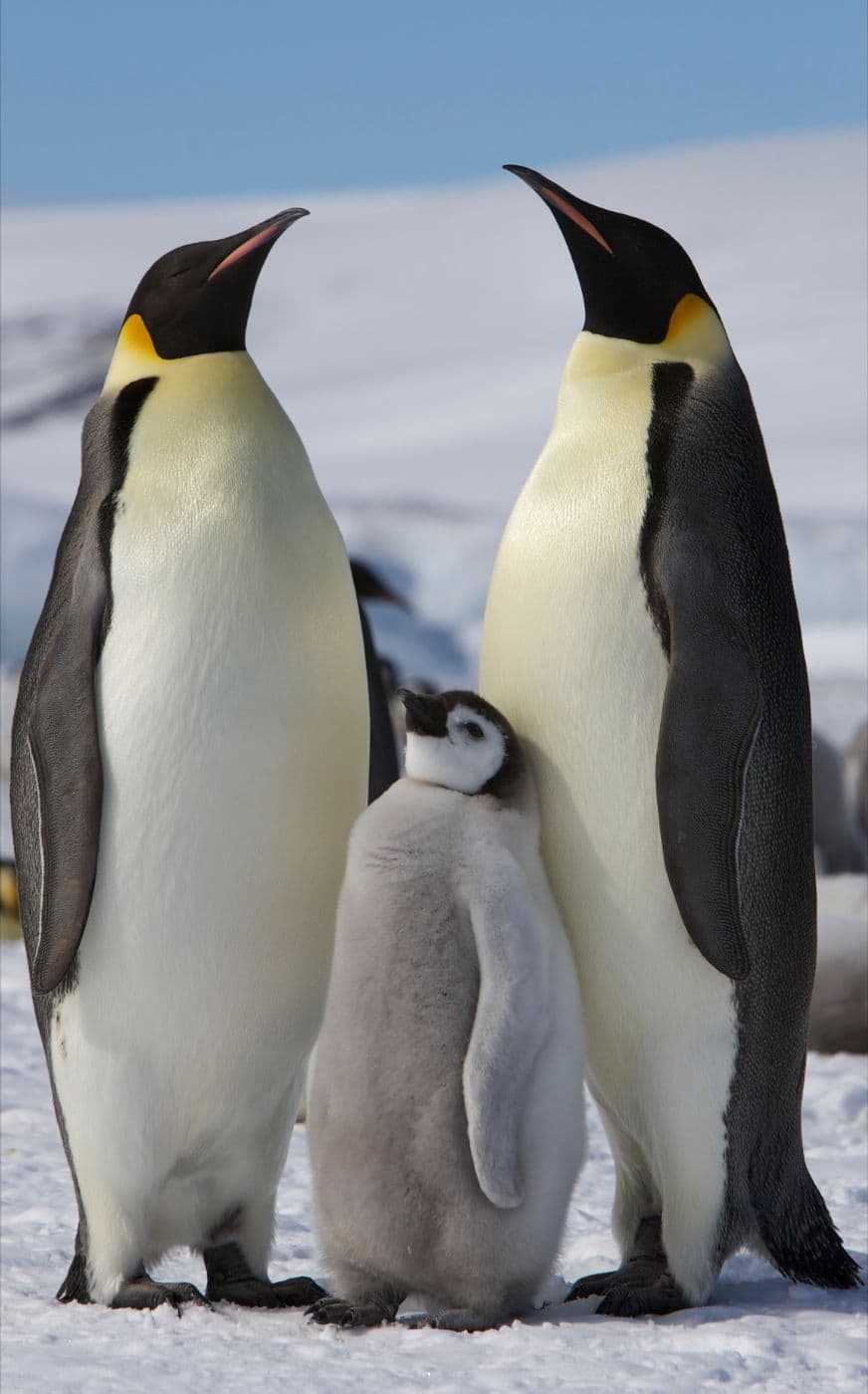
Emperor penguins are the largest of all penguin species, standing up to 1.2 meters tall and weighing as much as 35 kilograms. Their dense, layered feathers and thick fat reserves provide insulation against the harshest cold on Earth.
Habitat and Distribution
Emperor penguins live exclusively in Antarctica, breeding on stable sea ice far from open water. They are uniquely adapted to survive and breed during the Antarctic winter, when temperatures plunge and darkness lasts for months.
Reproduction and Life Cycle
After the female lays a single egg, she transfers it to the male and departs to feed at sea. The male balances the egg on his feet, covered by a warm skin fold, and fasts for around two months while huddling with other males for warmth until the chick hatches.
Hunting and Diet
Emperor penguins are powerful swimmers, diving deeper than any other bird in search of fish, krill, and squid. Their streamlined bodies and strong flippers allow dives lasting over 20 minutes.
Conservation Status
Emperor penguins are classified as Near Threatened, with climate change posing the most serious long-term risk as melting sea ice threatens their breeding grounds and food supply.
Fun Facts
- 1Male emperor penguins incubate their egg on their feet for about two months through the Antarctic winter without eating.
- 2Emperor penguins can dive deeper than any other bird, reaching depths over 500 meters.
- 3They huddle together in large groups to conserve heat in temperatures as low as -60 degrees Celsius.
- 4Chicks are covered in a thick coat of down to survive the extreme cold.
Behaviors
- •Huddle in large colonies for warmth
- •Males incubate the egg
- •Deep-diving hunters
Threats to Survival
- •Climate change and melting sea ice
- •Shifts in prey availability