At a Glance
Weight
6000 kg
Height
3 m
Top Speed
40 km/h
Population
~415,000
Trend: Declining
About
African Elephant (Loxodonta africana)
The largest living land animal, known for its intelligence, tight-knit family herds, and iconic trunk and tusks.
Physical Characteristics
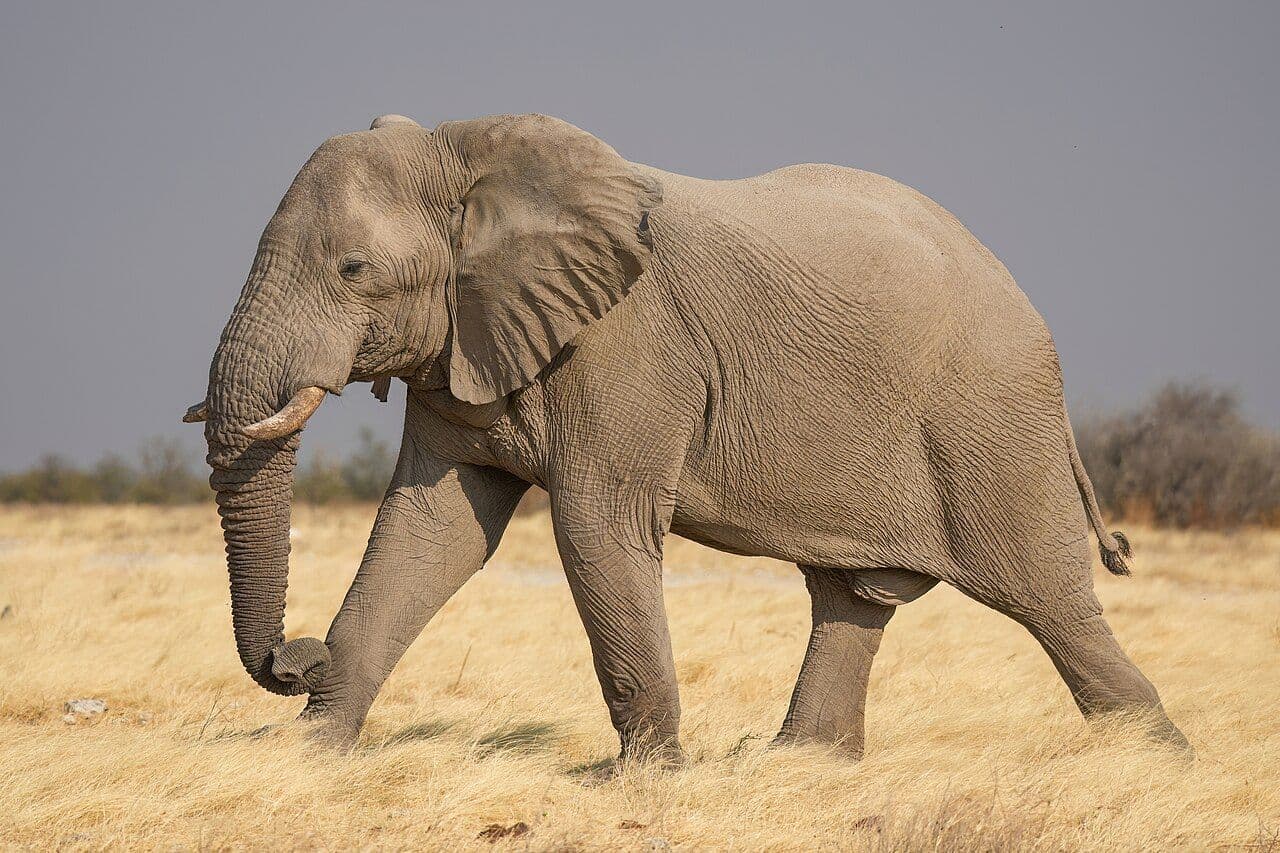
African elephants are the largest land animals alive today. Males can weigh up to 6,000 kilograms and stand over 3 meters tall at the shoulder. Their most distinctive features are their large ears, shaped like the African continent, and their long, muscular trunk used for breathing, drinking, feeding, and grasping objects.
Habitat and Distribution
African elephants roam across savannas, grasslands, forests, and deserts throughout sub-Saharan Africa. Their range has shrunk considerably over the past century due to expanding human settlements and agriculture, but they remain highly adaptable to varied landscapes.
Social Structure and Behavior
Elephants live in tight family herds led by an experienced matriarch. Females and their offspring stay together for life, while males leave the herd upon reaching adolescence to live alone or in small bachelor groups. Elephants display remarkable intelligence, empathy, and memory, and are known to mourn deceased herd members.
Diet and Feeding
As herbivores, elephants spend up to 16 hours a day eating grasses, leaves, bark, and fruit, consuming as much as 150 kilograms of vegetation daily. Their constant foraging shapes entire ecosystems, earning them the title of "ecosystem engineers."
Conservation Status
African elephants are classified as Endangered by the IUCN, with populations under severe pressure from poaching for ivory and habitat loss. Conservation efforts focus on anti-poaching enforcement, protected corridors, and reducing conflict with local communities.
Fun Facts
- 1An elephant trunk has more than 40,000 muscles.
- 2Elephants can recognize themselves in a mirror, a rare sign of self-awareness.
- 3A herd is led by an older matriarch who guides the group to food and water.
- 4Elephants communicate over long distances using low-frequency rumbles.
Behaviors
- •Live in matriarchal herds
- •Use tools such as branches to swat flies
- •Mourn their dead
Threats to Survival
- •Poaching for ivory
- •Habitat loss
- •Human-wildlife conflict