At a Glance
Weight
1200 kg
Height
5.5 m
Top Speed
60 km/h
Population
~117,000
Trend: Declining
About
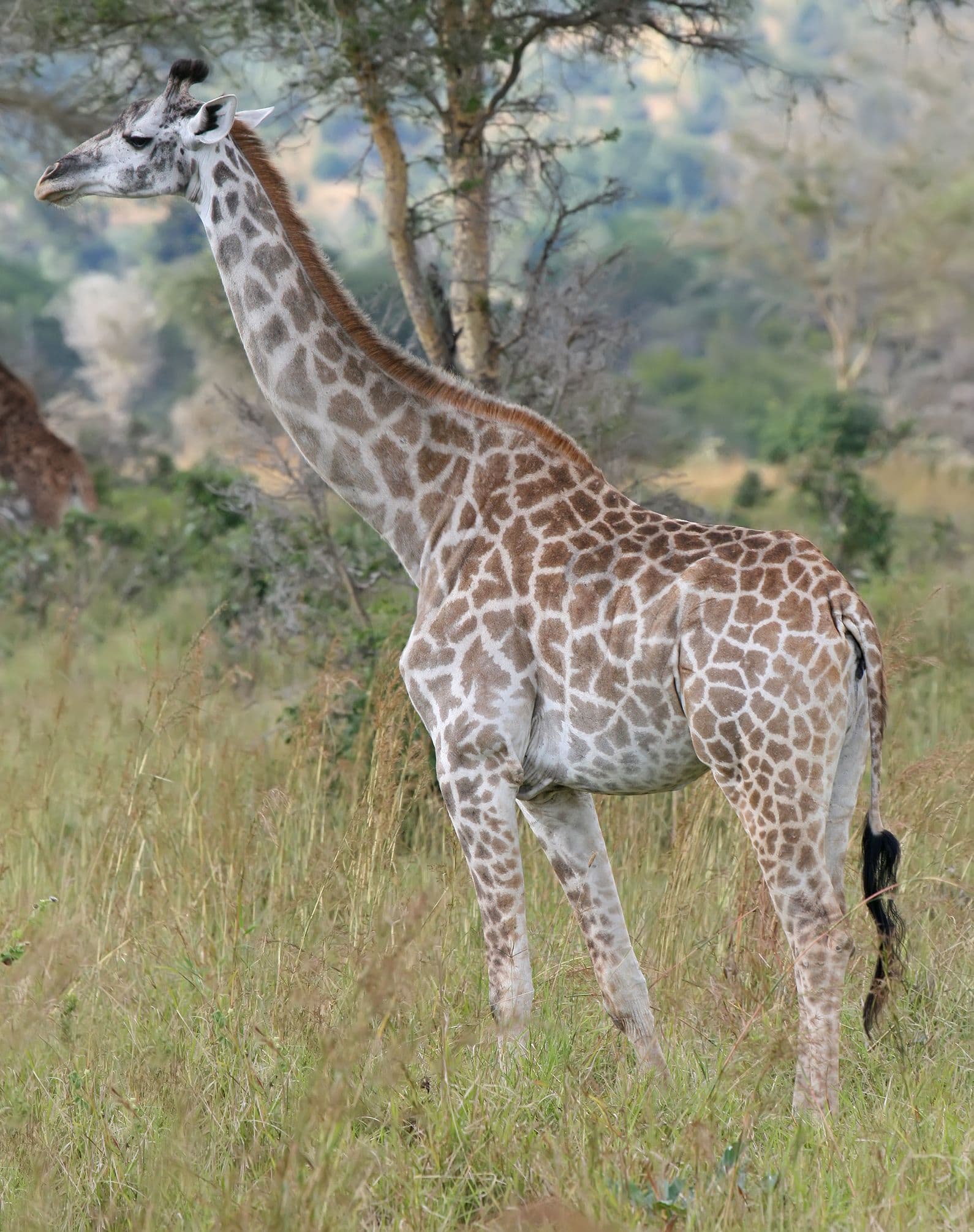
Giraffe (Giraffa camelopardalis)
The tallest living land animal, known for its extraordinarily long neck, distinctive coat pattern, and gentle nature.
Physical Characteristics
Giraffes are the tallest land animals, with adult males reaching heights of 5.5 meters. Their long neck and legs allow them to browse on leaves far out of reach of most other herbivores. Despite its length, a giraffe neck has only seven vertebrae, each greatly elongated.
Habitat and Distribution
Giraffes live across the savannas and open woodlands of sub-Saharan Africa, favoring areas with scattered acacia trees. They are highly mobile and can travel long distances in search of food and water.
Diet and Feeding
As herbivores, giraffes feed mainly on acacia leaves, using their long prehensile tongue and tough lips to strip foliage from thorny branches. An adult giraffe can eat up to 34 kilograms of vegetation per day.
Conservation Status
Giraffes are classified as Vulnerable, with populations declining across much of Africa due to habitat loss, poaching, and human conflict. Conservation groups are working to protect remaining habitat corridors and monitor population trends.
Fun Facts
- 1A giraffe neck contains only seven vertebrae, the same number as a human.
- 2Each giraffe's coat pattern is unique.
- 3Giraffes sleep only about 30 minutes to two hours a day.
- 4A giraffe tongue can be up to 50 centimeters long and is dark blue to protect against sunburn.
Behaviors
- •Live in loose, open herds
- •Browse on treetop leaves
- •Rarely lie down to sleep
Threats to Survival
- •Habitat loss
- •Poaching
- •Civil unrest in parts of their range