At a Glance
Weight
115 kg
Length
1.5 m
Population
~1,860
Trend: Increasing
About
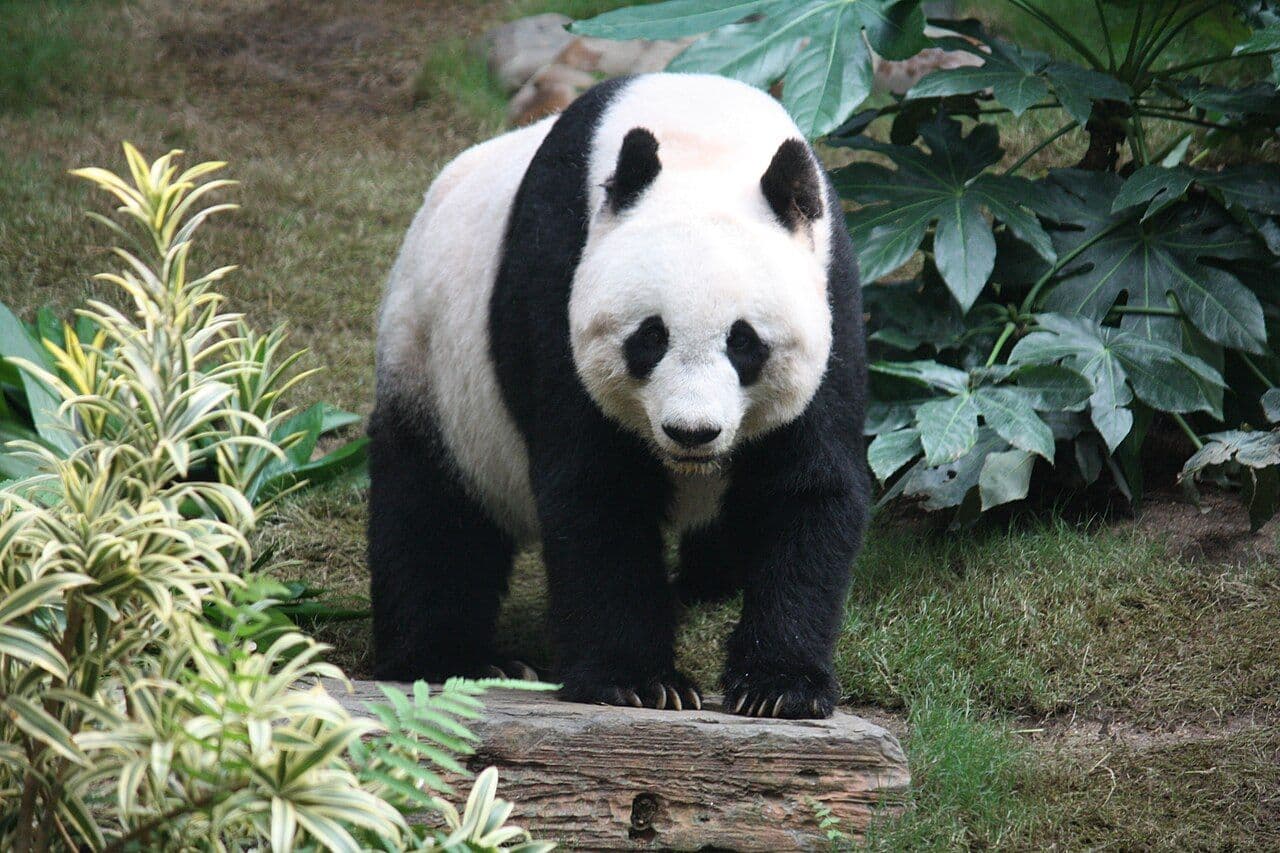
Giant Panda (Ailuropoda melanoleuca)
A beloved black-and-white bear native to the misty bamboo forests of China, subsisting almost entirely on bamboo.
Physical Characteristics
Giant pandas are stocky bears easily recognized by their black-and-white coat. Adults typically weigh between 70 and 115 kilograms. A specialized wrist bone acts as a pseudo-thumb, giving pandas the dexterity to grip and strip bamboo stalks.
Habitat and Distribution
Giant pandas are found only in a handful of mountain ranges in central China, where cool, misty bamboo forests provide their primary food source. Habitat fragmentation from agriculture and infrastructure has isolated many panda populations into small pockets.
Diet and Feeding
Despite belonging to the order Carnivora, giant pandas eat almost exclusively bamboo, consuming 12 to 38 kilograms of it each day. Because bamboo is low in nutrients, pandas must spend most of their waking hours feeding.
Conservation Status
Giant pandas were reclassified from Endangered to Vulnerable after decades of conservation work in China, including reforestation, protected reserves, and captive breeding programs. Their population continues to slowly recover, making them a global conservation success story.
Fun Facts
- 1Pandas spend up to 12 hours a day eating bamboo.
- 2A newborn panda cub weighs about 100 grams, roughly 1/900th the size of its mother.
- 3Pandas have an extra "thumb," an enlarged wrist bone, to help grip bamboo stalks.
- 4Despite their diet, pandas retain the digestive system of a carnivore.
Behaviors
- •Mostly solitary
- •Excellent tree climbers
- •Communicate through scent marking
Threats to Survival
- •Habitat fragmentation
- •Low reproductive rate
- •Bamboo die-offs