At a Glance
Weight
45 kg
Length
1.6 m
Top Speed
60 km/h
Population
~300,000
Trend: Stable
About
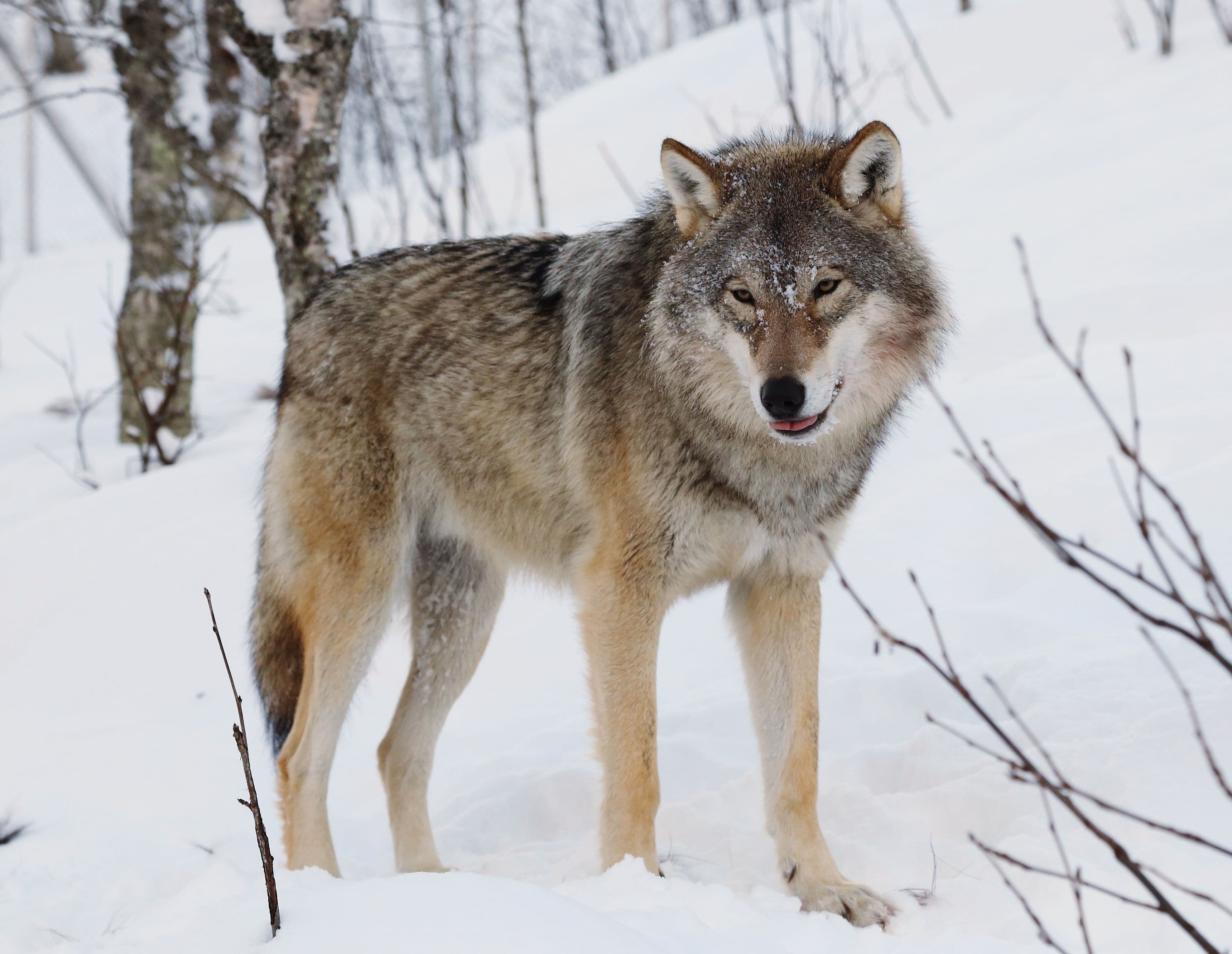
Gray Wolf (Canis lupus)
A highly social predator that lives and hunts in coordinated packs, playing a key role as an apex predator across the northern hemisphere.
Physical Characteristics
Gray wolves are the largest wild members of the dog family, with thick fur that ranges from white to black. Adults typically weigh between 30 and 45 kilograms and are built for endurance running over long distances.
Habitat and Distribution
Gray wolves once ranged across most of the northern hemisphere and still inhabit large areas of North America, Europe, and Asia, from dense forests to open tundra and grassland.
Social Structure and Behavior
Wolves live in packs typically led by a breeding pair, with offspring from previous years helping to raise and protect new pups. Packs cooperate closely to hunt, defend territory, and raise young, communicating through howls, scent marking, and body posture.
Hunting and Diet
As apex predators, wolves primarily hunt large ungulates such as deer, elk, and moose, often targeting weak or vulnerable individuals. Cooperative hunting allows packs to take down prey far larger than a single wolf could manage alone.
Conservation Status
Gray wolves are listed as Least Concern globally, though regional populations remain sensitive to habitat loss and human conflict. Reintroduction programs, such as in Yellowstone National Park, have demonstrated the wolf's crucial role in balancing ecosystems.
Fun Facts
- 1Wolf packs are usually family units led by a breeding pair.
- 2A wolf howl can be heard from up to 10 kilometers away.
- 3Wolves can travel up to 50 kilometers in a single day while hunting.
- 4Wolves have one of the most varied diets of any large carnivore.
Behaviors
- •Live and hunt in packs
- •Communicate through howls and body language
- •Defend large territories
Threats to Survival
- •Habitat loss
- •Human persecution
- •Vehicle collisions