At a Glance
Weight
220 kg
Length
3 m
Top Speed
65 km/h
Population
~5,500
Trend: Increasing
About
Tiger (Panthera tigris)
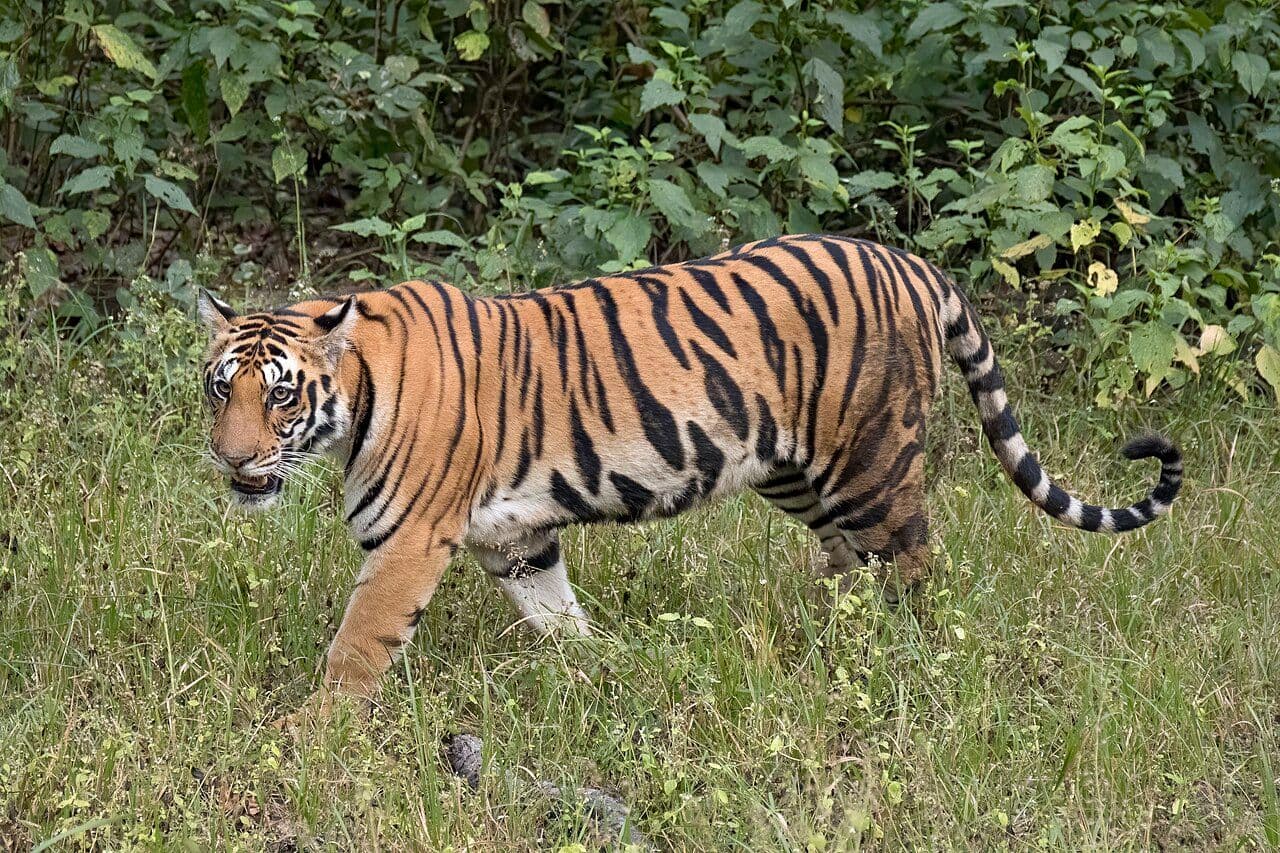
The largest of all wild cats, easily recognized by its bold orange coat and black stripes, and a solitary, powerful hunter.
Physical Characteristics
Tigers are the largest cat species in the world, with males weighing up to 220 kilograms and measuring 3 meters from nose to tail. Their orange coat with black stripes provides effective camouflage in tall grass and dappled forest light, and no two tigers share the exact same stripe pattern.
Habitat and Distribution
Tigers once ranged across most of Asia but are now confined to fragmented pockets of forest, grassland, and mangrove swamp in South and Southeast Asia and the Russian Far East. Different subspecies, such as the Bengal and Siberian tiger, have adapted to a wide range of climates.
Hunting and Diet
Tigers are solitary, ambush predators that rely on stealth and power rather than endurance. They stalk prey such as deer, wild boar, and buffalo before launching a short, explosive charge. A tiger can eat up to 40 kilograms of meat in one sitting, followed by several days of rest.
Conservation Status
Tigers are classified as Endangered, with wild populations reduced to around 5,500 individuals due to poaching and habitat loss. Dedicated conservation programs across India, Nepal, and Russia have led to modest population increases in recent years.
Fun Facts
- 1Every tiger's stripe pattern is unique, like a human fingerprint.
- 2Tigers are excellent swimmers and often cool off in rivers and lakes.
- 3A tiger can leap more than 5 meters in a single bound.
- 4Tigers mark their territory with scent, claw marks, and roars.
Behaviors
- •Solitary and territorial
- •Ambush hunters
- •Strong swimmers
Threats to Survival
- •Poaching
- •Habitat fragmentation
- •Declining prey populations